

Specification
| Description | Recombinant protein from the full-length sequence of homo sapiens patatin like phospholipase domain containing 2 (PNPLA2) (NM_020376). |
| Organism | Homo sapiens (Human) |
| Expression Host | Human Cells |
| Tag Info | His or DYKDDDDK. Please contact us if you need further information or require specific designed tag. |
| Purity | Greater than 90% by SDS-PAGE gel |
| Uniprot ID | Q96AD5 |
| Entry Name | PLPL2_HUMAN |
| Gene Names | PNPLA2 ATGL FP17548 |
| Alternative Gene Names | ATGL |
| Alternative Protein Names | Patatin-like phospholipase domain-containing protein 2 (EC 3.1.1.3) (Adipose triglyceride lipase) (Calcium-independent phospholipase A2) (Desnutrin) (IPLA2-zeta) (Pigment epithelium-derived factor) (TTS2.2) (Transport-secretion protein 2) (TTS2) |
| Application | Antigens, Western, ELISA and other in vitro binding or in vivo functional assays, and protein-protein interaction studies; For research & development use only! |
| Buffer | Purified protein formulated in a sterile solution of PBS buffer, pH7.2, without any preservatives |
| Endotoxin | Endotoxin level is < 0.1 ng/µg of protein (<1EU /µg) |
| Length | 504 |
| Molecular Weight(Da) | 55316 |
| Protein Sequence | (The sequence of expressed protein may have some variation from the sequence shown below. Please contact us for the exact sequence.) MFPREKTWNISFAGCGFLGVYYVGVASCLREHAPFLVANATHIYGASAGALTATALVTGVCLGEAGAKFIEVSKEARKRFLGPLHPSFNLVKIIRSFLLKVLPADSHEHASGRLGISLTRVSDGENVIISHFNSKDELIQANVCSGFIPVYCGLIPPSLQGVRYVDGGISDNLPLYELKNTITVSPFSGESDICPQDSSTNIHELRVTNTSIQFNLRNLYRLSKALFPPEPLVLREMCKQGYRDGLRFLQRNGLLNRPNPLLALPPARPHGPEDKDQAVESAQAEDYSQLPGEDHILEHLPARLNEALLEACVEPTDLLTTLSNMLPVRLATAMMVPYTLPLESALSFTIRLLEWLPDVPEDIRWMKEQTGSICQYLVMRAKRKLGRHLPSRLPEQVELRRVQSLPSVPLSCAAYREALPGWMRNNLSLGDALAKWEECQRQLLLGLFCTNVAFPPEALRMRAPADPAPAPADPASPQHQLAGPAPLLSTPAPEARPVIGALGL |
Background
| Function | FUNCTION: Catalyzes the initial step in triglyceride hydrolysis in adipocyte and non-adipocyte lipid droplets (PubMed:15550674, PubMed:15364929, PubMed:16150821). Exhibits a strong preference for the hydrolysis of long-chain fatty acid esters at the sn-2 position of the glycerol backbone (By similarity). Also has acylglycerol transacylase activity. Acts coordinately with LIPE/HLS and DGAT2 within the lipolytic cascade (By similarity). Transfers fatty acid from triglyceride to retinol, hydrolyzes retinylesters, and generates 1,3-diacylglycerol from triglycerides (PubMed:17603008). Regulates adiposome size and may be involved in the degradation of adiposomes (PubMed:16239926). May play an important role in energy homeostasis. May play a role in the response of the organism to starvation, enhancing hydrolysis of triglycerides and providing free fatty acids to other tissues to be oxidized in situations of energy depletion (By similarity). {ECO:0000250|UniProtKB:Q8BJ56, ECO:0000269|PubMed:15364929, ECO:0000269|PubMed:15550674, ECO:0000269|PubMed:16150821, ECO:0000269|PubMed:16239926, ECO:0000269|PubMed:17603008}. |
| Pathway | Glycerolipid metabolism; triacylglycerol degradation. |
| Protein Families | |
| Tissue Specificity | Highest expression in adipose tissue. Also detected in heart, skeletal muscle, and portions of the gastrointestinal tract. Detected in normal retina and retinoblastoma cells. Detected in retinal pigment epithelium and, at lower intensity, in the inner segments of photoreceptors and in the ganglion cell layer of the neural retina (at protein level). {ECO:0000269|PubMed:15550674, ECO:0000269|PubMed:16150821, ECO:0000269|PubMed:16249444, ECO:0000269|PubMed:17032652}. |
QC Data
| Note | Please contact us for QC Data |
| Product Image (Reference Only) | 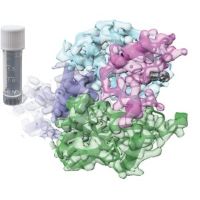 |