

Specification
| Description | Recombinant protein from the full-length sequence of Homo sapiens peptidoglycan recognition protein 4 (PGLYRP4) (NM_020393). |
| Organism | Homo sapiens (Human) |
| Expression Host | Human Cells |
| Tag Info | His or DYKDDDDK. Please contact us if you need further information or require specific designed tag. |
| Purity | Greater than 90% by SDS-PAGE gel |
| Uniprot ID | Q96LB8 |
| Entry Name | PGRP4_HUMAN |
| Gene Names | PGLYRP4 PGRPIB SBBI67 |
| Alternative Gene Names | PGRPIB |
| Alternative Protein Names | Peptidoglycan recognition protein 4 (Peptidoglycan recognition protein I-beta) (PGLYRPIbeta) (PGRP-I-beta) (Peptidoglycan recognition protein intermediate beta) |
| Application | Antigens, Western, ELISA and other in vitro binding or in vivo functional assays, and protein-protein interaction studies; For research & development use only! |
| Buffer | Purified protein formulated in a sterile solution of PBS buffer, pH7.2, without any preservatives |
| Endotoxin | Endotoxin level is < 0.1 ng/µg of protein (<1EU /µg) |
| Length | 373 |
| Molecular Weight(Da) | 40620 |
| Protein Sequence | (The sequence of expressed protein may have some variation from the sequence shown below. Please contact us for the exact sequence.) MLPWLLVFSALGIQAWGDSSWNKTQAKQVSEGLQYLFENISQLTEKGLPTDVSTTVSRKAWGAEAVGCSIQLTTPVNVLVIHHVPGLECHDQTVCSQRLRELQAHHVHNNSGCDVAYNFLVGDDGRVYEGVGWNIQGVHTQGYNNISLGFAFFGTKKGHSPSPAALSAMENLITYAVQKGHLSSSYVQPLLGKGENCLAPRQKTSLKKACPGVVPRSVWGARETHCPRMTLPAKYGIIIHTAGRTCNISDECRLLVRDIQSFYIDRLKSCDIGYNFLVGQDGAIYEGVGWNVQGSSTPGYDDIALGITFMGTFTGIPPNAAALEAAQDLIQCAMVKGYLTPNYLLVGHSDVARTLSPGQALYNIISTWPHFKH |
Background
| Function | FUNCTION: Pattern receptor that binds to murein peptidoglycans (PGN) of Gram-positive bacteria. Has bactericidal activity towards Gram-positive bacteria. May kill Gram-positive bacteria by interfering with peptidoglycan biosynthesis. Binds also to Gram-negative bacteria, and has bacteriostatic activity towards Gram-negative bacteria. Plays a role in innate immunity. {ECO:0000269|PubMed:16354652}. |
| Pathway | |
| Protein Families | N-acetylmuramoyl-L-alanine amidase 2 family |
| Tissue Specificity | Detected in skin epidermis, eccrine sweat glands and ducts, mucous cells in the submandibular salivary gland, mucous cells in the throat, ciliary body epithelial cells of the eye, small intestine, colon, stomach and in mature epithelial cells of the tongue (at protein level). High expression in skin and esophagus. Expressed also to a much lesser extent in the tonsils and thymus. {ECO:0000269|PubMed:11461926, ECO:0000269|PubMed:16354652}. |
QC Data
| Note | Please contact us for QC Data |
| Product Image (Reference Only) | 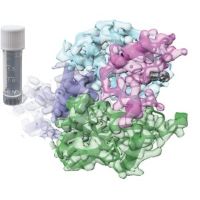 |