

Specification
| Organism | Homo sapiens (Human) |
| Expression Host | E.Coli |
| Tag Info | Tag-Free |
| Purity | >97% as determined by SDS-PAGE and HPLC. |
| Uniprot ID | P01583 |
| Uniprot Entry Name | IL1A_HUMAN |
| Gene Names | IL1A,IL1F1 |
| Alternative Names | IL-1 alpha, |
| Expression Region | Full Length of Mature Protein (113-271aa) |
| Molecular Weight | 18.0 kDa |
| Endotoxin | Less than 1.0 EU/µg as determined by LAL method. |
| Sequence | SAPFSFLSNV KYNFMRIIKY EFILNDALNQ SIIRANDQYL TAAALHNLDE AVKFDMGAYK SSKDDAKITV ILRISKTQLY VTAQDEDQPV LLKEMPEIPK TITGSETNLL FFWETHGTKN YFTSVAHPNL FIATKQDYWV CLAGGPPSIT DFQILENQA |
| Product Form | Lyophilized powder (Lyophilized from a 0.2 µm filtered PBS, pH 7.4) |
| Reconstitution | Please reconstitute protein in deionized sterile water and we recommend that briefly centrifuge thevial prior to opening the vial .We recommend aliquot for long-term storage at -20℃/-80℃. |
Background
| Relevance | Produced by activated macrophages, IL-1 stimulates thymocyte proliferation by inducing IL-2 release, B-cell maturation and proliferation, and fibroblast growth factor activity. IL-1 proteins are involved in the inflammatory response, being identified as endogenous pyrogens, and are reported to stimulate the release of prostaglandin and collagenase from synovial cells. |
| Function | Produced by activated macrophages, IL-1 stimulates thymocyte proliferation by inducing IL-2 release, B-cell maturation and proliferation, and fibroblast growth factor activity. IL-1 proteins are involved in the inflammatory response, being identified as endogenous pyrogens, and are reported to stimulate the release of prostaglandin and collagenase from synovial cells. |
| Involvement in disease | |
| Subcellular Location | Secreted |
| Protein Families | IL-1 family |
| Tissue Specificity | |
| Pathway | MAPKsignalingpathway |
QC Data
| Note | Please contact us for QC Data |
| Product Image (Reference Only) | 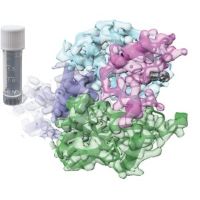 |