

Specification
| Description | Recombinant protein from the full-length sequence of homo sapiens inositol polyphosphate-5-phosphatase D (INPP5D), transcript variant 2 (NM_005541). |
| Organism | Homo sapiens (Human) |
| Expression Host | Human Cells |
| Tag Info | His or DYKDDDDK. Please contact us if you need further information or require specific designed tag. |
| Purity | Greater than 90% by SDS-PAGE gel |
| Uniprot ID | Q92835 |
| Entry Name | SHIP1_HUMAN |
| Gene Names | INPP5D SHIP SHIP1 |
| Alternative Gene Names | SHIP SHIP1 |
| Alternative Protein Names | Phosphatidylinositol 3,4,5-trisphosphate 5-phosphatase 1 (EC 3.1.3.86) (Inositol polyphosphate-5-phosphatase D) (EC 3.1.3.56) (Inositol polyphosphate-5-phosphatase of 145 kDa) (SIP-145) (Phosphatidylinositol 4,5-bisphosphate 5-phosphatase) (EC 3.1.3.36) (SH2 domain-containing inositol 5'-phosphatase 1) (SH2 domain-containing inositol phosphatase 1) (SHIP-1) (p150Ship) (hp51CN) |
| Application | Antigens, Western, ELISA and other in vitro binding or in vivo functional assays, and protein-protein interaction studies; For research & development use only! |
| Buffer | Purified protein formulated in a sterile solution of PBS buffer, pH7.2, without any preservatives |
| Endotoxin | Endotoxin level is < 0.1 ng/µg of protein (<1EU /µg) |
| Length | 1189 |
| Molecular Weight(Da) | 133292 |
| Protein Sequence | (The sequence of expressed protein may have some variation from the sequence shown below. Please contact us for the exact sequence.) MVPCWNHGNITRSKAEELLSRTGKDGSFLVRASESISRAYALCVLYRNCVYTYRILPNEDDKFTVQASEGVSMRFFTKLDQLIEFYKKENMGLVTHLQYPVPLEEEDTGDDPEEDTVESVVSPPELPPRNIPLTASSCEAKEVPFSNENPRATETSRPSLSETLFQRLQSMDTSGLPEEHLKAIQDYLSTQLAQDSEFVKTGSSSLPHLKKLTTLLCKELYGEVIRTLPSLESLQRLFDQQLSPGLRPRPQVPGEANPINMVSKLSQLTSLLSSIEDKVKALLHEGPESPHRPSLIPPVTFEVKAESLGIPQKMQLKVDVESGKLIIKKSKDGSEDKFYSHKKILQLIKSQKFLNKLVILVETEKEKILRKEYVFADSKKREGFCQLLQQMKNKHSEQPEPDMITIFIGTWNMGNAPPPKKITSWFLSKGQGKTRDDSADYIPHDIYVIGTQEDPLSEKEWLEILKHSLQEITSVTFKTVAIHTLWNIRIVVLAKPEHENRISHICTDNVKTGIANTLGNKGAVGVSFMFNGTSLGFVNSHLTSGSEKKLRRNQNYMNILRFLALGDKKLSPFNITHRFTHLFWFGDLNYRVDLPTWEAETIIQKIKQQQYADLLSHDQLLTERREQKVFLHFEEEEITFAPTYRFERLTRDKYAYTKQKATGMKYNLPSWCDRVLWKSYPLVHVVCQSYGSTSDIMTSDHSPVFATFEAGVTSQFVSKNGPGTVDSQGQIEFLRCYATLKTKSQTKFYLEFHSSCLESFVKSQEGENEEGSEGELVVKFGETLPKLKPIISDPEYLLDQHILISIKSSDSDESYGEGCIALRLEATETQLPIYTPLTHHGELTGHFQGEIKLQTSQGKTREKLYDFVKTERDESSGPKTLKSLTSHDPMKQWEVTSRAPPCSGSSITEIINPNYMGVGPFGPPMPLHVKQTLSPDQQPTAWSYDQPPKDSPLGPCRGESPPTPPGQPPISPKKFLPSTANRGLPPRTQESRPSDLGKNAGDTLPQEDLPLTKPEMFENPLYGSLSSFPKPAPRKDQESPKMPRKEPPPCPEPGILSPSIVLTKAQEADRGEGPGKQVPAPRLRSFTCSSSAEGRAAGGDKSQGKPKTPVSSQAPVPAKRPIKPSRSEINQQTPPTPTPRPPLPVKSPAVLHLQHSKGRDYRDNTELPHHGKHRPEEGPPGPLGRTAMQ |
Background
| Function | FUNCTION: Phosphatidylinositol (PtdIns) phosphatase that specifically hydrolyzes the 5-phosphate of phosphatidylinositol-3,4,5-trisphosphate (PtdIns(3,4,5)P3) to produce PtdIns(3,4)P2, thereby negatively regulating the PI3K (phosphoinositide 3-kinase) pathways (PubMed:8723348, PubMed:10764818, PubMed:8769125). Able also to hydrolyzes the 5-phosphate of phosphatidylinositol-4,5-bisphosphate (PtdIns(4,5)P3) and inositol 1,3,4,5-tetrakisphosphate (PubMed:9108392, PubMed:10764818, PubMed:8769125). Acts as a negative regulator of B-cell antigen receptor signaling. Mediates signaling from the FC-gamma-RIIB receptor (FCGR2B), playing a central role in terminating signal transduction from activating immune/hematopoietic cell receptor systems. Acts as a negative regulator of myeloid cell proliferation/survival and chemotaxis, mast cell degranulation, immune cells homeostasis, integrin alpha-IIb/beta-3 signaling in platelets and JNK signaling in B-cells. Regulates proliferation of osteoclast precursors, macrophage programming, phagocytosis and activation and is required for endotoxin tolerance. Involved in the control of cell-cell junctions, CD32a signaling in neutrophils and modulation of EGF-induced phospholipase C activity (PubMed:16682172). Key regulator of neutrophil migration, by governing the formation of the leading edge and polarization required for chemotaxis. Modulates FCGR3/CD16-mediated cytotoxicity in NK cells. Mediates the activin/TGF-beta-induced apoptosis through its Smad-dependent expression. {ECO:0000269|PubMed:10764818, ECO:0000269|PubMed:12421919, ECO:0000269|PubMed:16682172, ECO:0000269|PubMed:8723348, ECO:0000269|PubMed:8769125, ECO:0000269|PubMed:9108392}. |
| Pathway | |
| Protein Families | Inositol 1,4,5-trisphosphate 5-phosphatase family |
| Tissue Specificity | Specifically expressed in immune and hematopoietic cells. Expressed in bone marrow and blood cells. Levels vary considerably within this compartment. Present in at least 74% of immature CD34+ cells, whereas within the more mature population of CD33+ cells, it is present in only 10% of cells. Present in the majority of T-cells, while it is present in a minority of B-cells (at protein level). {ECO:0000269|PubMed:8769125, ECO:0000269|PubMed:8874179, ECO:0000269|PubMed:9058707, ECO:0000269|PubMed:9108392}. |
QC Data
| Note | Please contact us for QC Data |
| Product Image (Reference Only) | 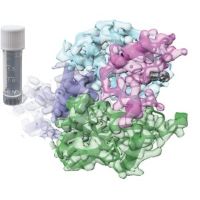 |