

Specification
| Description | Recombinant protein from the full-length sequence of homo sapiens fructose-bisphosphatase 1 (FBP1), transcript variant 1 (NM_000507). |
| Organism | Homo sapiens (Human) |
| Expression Host | Human Cells |
| Tag Info | His or DYKDDDDK. Please contact us if you need further information or require specific designed tag. |
| Purity | Greater than 90% by SDS-PAGE gel |
| Uniprot ID | P09467 |
| Entry Name | F16P1_HUMAN |
| Gene Names | FBP1 FBP |
| Alternative Gene Names | FBP |
| Alternative Protein Names | Fructose-1,6-bisphosphatase 1 (FBPase 1) (EC 3.1.3.11) (D-fructose-1,6-bisphosphate 1-phosphohydrolase 1) (Liver FBPase) |
| Application | Antigens, Western, ELISA and other in vitro binding or in vivo functional assays, and protein-protein interaction studies; For research & development use only! |
| Buffer | Purified protein formulated in a sterile solution of PBS buffer, pH7.2, without any preservatives |
| Endotoxin | Endotoxin level is < 0.1 ng/µg of protein (<1EU /µg) |
| Length | 338 |
| Molecular Weight(Da) | 36842 |
| Protein Sequence | (The sequence of expressed protein may have some variation from the sequence shown below. Please contact us for the exact sequence.) MADQAPFDTDVNTLTRFVMEEGRKARGTGELTQLLNSLCTAVKAISSAVRKAGIAHLYGIAGSTNVTGDQVKKLDVLSNDLVMNMLKSSFATCVLVSEEDKHAIIVEPEKRGKYVVCFDPLDGSSNIDCLVSVGTIFGIYRKKSTDEPSEKDALQPGRNLVAAGYALYGSATMLVLAMDCGVNCFMLDPAIGEFILVDKDVKIKKKGKIYSLNEGYARDFDPAVTEYIQRKKFPPDNSAPYGARYVGSMVADVHRTLVYGGIFLYPANKKSPNGKLRLLYECNPMAYVMEKAGGMATTGKEAVLDVIPTDIHQRAPVILGSPDDVLEFLKVYEKHSAQ |
Background
| Function | FUNCTION: Catalyzes the hydrolysis of fructose 1,6-bisphosphate to fructose 6-phosphate in the presence of divalent cations, acting as a rate-limiting enzyme in gluconeogenesis. Plays a role in regulating glucose sensing and insulin secretion of pancreatic beta-cells. Appears to modulate glycerol gluconeogenesis in liver. Important regulator of appetite and adiposity; increased expression of the protein in liver after nutrient excess increases circulating satiety hormones and reduces appetite-stimulating neuropeptides and thus seems to provide a feedback mechanism to limit weight gain. {ECO:0000269|PubMed:16497803, ECO:0000269|PubMed:18375435, ECO:0000269|PubMed:22517657}. |
| Pathway | Carbohydrate biosynthesis; gluconeogenesis. |
| Protein Families | FBPase class 1 family |
| Tissue Specificity |
QC Data
| Note | Please contact us for QC Data |
| Product Image (Reference Only) | 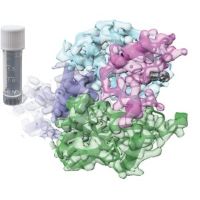 |