

Specification
| Description | Recombinant protein from the full-length sequence of Homo sapiens complement C1q binding protein (C1QBP) (NM_001212). |
| Organism | Homo sapiens (Human) |
| Expression Host | Human Cells |
| Tag Info | His or DYKDDDDK. Please contact us if you need further information or require specific designed tag. |
| Purity | Greater than 90% by SDS-PAGE gel |
| Uniprot ID | Q07021 |
| Entry Name | C1QBP_HUMAN |
| Gene Names | C1QBP GC1QBP HABP1 SF2P32 |
| Alternative Gene Names | GC1QBP HABP1 SF2P32 |
| Alternative Protein Names | Complement component 1 Q subcomponent-binding protein, mitochondrial (ASF/SF2-associated protein p32) (Glycoprotein gC1qBP) (C1qBP) (Hyaluronan-binding protein 1) (Mitochondrial matrix protein p32) (gC1q-R protein) (p33) (SF2AP32) |
| Application | Antigens, Western, ELISA and other in vitro binding or in vivo functional assays, and protein-protein interaction studies; For research & development use only! |
| Buffer | Purified protein formulated in a sterile solution of PBS buffer, pH7.2, without any preservatives |
| Endotoxin | Endotoxin level is < 0.1 ng/µg of protein (<1EU /µg) |
| Length | 282 |
| Molecular Weight(Da) | 31362 |
| Protein Sequence | (The sequence of expressed protein may have some variation from the sequence shown below. Please contact us for the exact sequence.) MLPLLRCVPRVLGSSVAGLRAAAPASPFRQLLQPAPRLCTRPFGLLSVRAGSERRPGLLRPRGPCACGCGCGSLHTDGDKAFVDFLSDEIKEERKIQKHKTLPKMSGGWELELNGTEAKLVRKVAGEKITVTFNINNSIPPTFDGEEEPSQGQKVEEQEPELTSTPNFVVEVIKNDDGKKALVLDCHYPEDEVGQEDEAESDIFSIREVSFQSTGESEWKDTNYTLNTDSLDWALYDHLMDFLADRGVDNTFADELVELSTALEHQEYITFLEDLKSFVKSQ |
Background
| Function | FUNCTION: Is believed to be a multifunctional and multicompartmental protein involved in inflammation and infection processes, ribosome biogenesis, protein synthesis in mitochondria, regulation of apoptosis, transcriptional regulation and pre-mRNA splicing. At the cell surface is thought to act as an endothelial receptor for plasma proteins of the complement and kallikrein-kinin cascades. Putative receptor for C1q; specifically binds to the globular 'heads' of C1q thus inhibiting C1; may perform the receptor function through a complex with C1qR/CD93. In complex with cytokeratin-1/KRT1 is a high affinity receptor for kininogen-1/HMWK. Can also bind other plasma proteins, such as coagulation factor XII leading to its autoactivation. May function to bind initially fluid kininogen-1 to the cell membrane. The secreted form may enhance both extrinsic and intrinsic coagulation pathways. It is postulated that the cell surface form requires docking with transmembrane proteins for downstream signaling which might be specific for a cell-type or response. By acting as C1q receptor is involved in chemotaxis of immature dendritic cells and neutrophils and is proposed to signal through CD209/DC-SIGN on immature dendritic cells, through integrin alpha-4/beta-1 during trophoblast invasion of the decidua, and through integrin beta-1 during endothelial cell adhesion and spreading. Signaling involved in inhibition of innate immune response is implicating the PI3K-AKT/PKB pathway. Required for protein synthesis in mitochondria (PubMed:28942965). In mitochondrial translation may be involved in formation of functional 55S mitoribosomes; the function seems to involve its RNA-binding activity. May be involved in the nucleolar ribosome maturation process; the function may involve the exchange of FBL for RRP1 in the association with pre-ribosome particles. Involved in regulation of RNA splicing by inhibiting the RNA-binding capacity of SRSF1 and its phosphorylation. Is required for the nuclear translocation of splicing factor U2AF1L4. Involved in regulation of CDKN2A- and HRK-mediated apoptosis. Stabilizes mitochondrial CDKN2A isoform smARF. May be involved in regulation of FOXC1 transcriptional activity and NFY/CCAAT-binding factor complex-mediated transcription. May play a role in antibacterial defense as it can bind to cell surface hyaluronan and inhibit Streptococcus pneumoniae hyaluronate lyase. May be involved in modulation of the immune response; ligation by HCV core protein is resulting in suppression of interleukin-12 production in monocyte-derived dendritic cells. Involved in regulation of antiviral response by inhibiting DDX58- and IFIH1-mediated signaling pathways probably involving its association with MAVS after viral infection. {ECO:0000269|PubMed:10022843, ECO:0000269|PubMed:10479529, ECO:0000269|PubMed:10722602, ECO:0000269|PubMed:11086025, ECO:0000269|PubMed:11859136, ECO:0000269|PubMed:15243141, ECO:0000269|PubMed:16140380, ECO:0000269|PubMed:16177118, ECO:0000269|PubMed:17881511, ECO:0000269|PubMed:18676636, ECO:0000269|PubMed:19004836, ECO:0000269|PubMed:19164550, ECO:0000269|PubMed:20810993, ECO:0000269|PubMed:21536856, ECO:0000269|PubMed:21544310, ECO:0000269|PubMed:22700724, ECO:0000269|PubMed:28942965, ECO:0000269|PubMed:8662673, ECO:0000269|PubMed:8710908, ECO:0000269|PubMed:9461517}.; FUNCTION: (Microbial infection) Involved in HIV-1 replication, presumably by contributing to splicing of viral RNA. {ECO:0000269|PubMed:12833064}.; FUNCTION: (Microbial infection) In infection processes acts as an attachment site for microbial proteins, including Listeria monocytogenes internalin B (InlB) and Staphylococcus aureus protein A. {ECO:0000269|PubMed:10722602, ECO:0000269|PubMed:10747014, ECO:0000269|PubMed:12411480}.; FUNCTION: (Microbial infection) Involved in replication of Rubella virus. {ECO:0000269|PubMed:12034482}. |
| Pathway | |
| Protein Families | MAM33 family |
| Tissue Specificity | Expressed on cell surface of peripheral blood cells (at protein level); Surface expression is reported for macrophages and monocyte-derived dendritic cells. {ECO:0000269|PubMed:12574814, ECO:0000269|PubMed:8662673}. |
QC Data
| Note | Please contact us for QC Data |
| Product Image (Reference Only) | 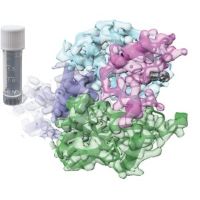 |