

Specification
| Description | Recombinant protein from the full-length sequence of Homo sapiens aldo-keto reductase family 1 member C4 (AKR1C4) (NM_001818). |
| Organism | Homo sapiens (Human) |
| Expression Host | Human Cells |
| Tag Info | His or DYKDDDDK. Please contact us if you need further information or require specific designed tag. |
| Purity | Greater than 90% by SDS-PAGE gel |
| Uniprot ID | P17516 |
| Entry Name | AK1C4_HUMAN |
| Gene Names | AKR1C4 CHDR |
| Alternative Gene Names | CHDR |
| Alternative Protein Names | Aldo-keto reductase family 1 member C4 (EC 1.1.1.-) (EC 1.1.1.209) (EC 1.1.1.210) (EC 1.1.1.51) (EC 1.1.1.53) (EC 1.1.1.62) (3-alpha-hydroxysteroid dehydrogenase type I) (3-alpha-HSD1) (EC 1.1.1.357) (3alpha-hydroxysteroid 3-dehydrogenase) (Chlordecone reductase) (CDR) (EC 1.1.1.225) (Dihydrodiol dehydrogenase 4) (DD-4) (DD4) (HAKRA) |
| Application | Antigens, Western, ELISA and other in vitro binding or in vivo functional assays, and protein-protein interaction studies; For research & development use only! |
| Buffer | Purified protein formulated in a sterile solution of PBS buffer, pH7.2, without any preservatives |
| Endotoxin | Endotoxin level is < 0.1 ng/µg of protein (<1EU /µg) |
| Length | 323 |
| Molecular Weight(Da) | 37067 |
| Protein Sequence | (The sequence of expressed protein may have some variation from the sequence shown below. Please contact us for the exact sequence.) MDPKYQRVELNDGHFMPVLGFGTYAPPEVPRNRAVEVTKLAIEAGFRHIDSAYLYNNEEQVGLAIRSKIADGSVKREDIFYTSKLWCTFFQPQMVQPALESSLKKLQLDYVDLYLLHFPMALKPGETPLPKDENGKVIFDTVDLSATWEVMEKCKDAGLAKSIGVSNFNCRQLEMILNKPGLKYKPVCNQVECHPYLNQSKLLDFCKSKDIVLVAHSALGTQRHKLWVDPNSPVLLEDPVLCALAKKHKQTPALIALRYQLQRGVVVLAKSYNEQRIRENIQVFEFQLTSEDMKVLDGLNRNYRYVVMDFLMDHPDYPFSDEY |
Background
| Function | FUNCTION: Cytosolic aldo-keto reductase that catalyzes the NADH and NADPH-dependent reduction of ketosteroids to hydroxysteroids. Liver specific enzyme that acts as NAD(P)(H)-dependent 3-, 17- and 20-ketosteroid reductase on the steroid nucleus and side chain (PubMed:14672942, PubMed:10998348, PubMed:7650035, PubMed:1530633, PubMed:11158055, PubMed:10634139, PubMed:19218247). Displays the ability to catalyze both oxidation and reduction in vitro, but most probably acts as a reductase in vivo since the oxidase activity measured in vitro is inhibited by physiological concentration of NADPH (PubMed:14672942). Acts preferentially as a 3-alpha-hydroxysteroid dehydrogenase (HSD) with a subsidiary 3-beta-HSD activity (PubMed:14672942). Catalyzes efficiently the transformation of the potent androgen 5-alpha-dihydrotestosterone (5alpha-DHT or 17beta-hydroxy-5alpha-androstan-3-one) into the less active form, 5-alpha-androstan-3-alpha,17-beta-diol (3-alpha-diol) (PubMed:11158055, PubMed:10998348, PubMed:14672942). Catalyzes the reduction of estrone into 17beta-estradiol but with low efficiency (PubMed:14672942). Metabolizes a broad spectrum of natural and synthetic therapeutic steroid and plays an important role in metabolism of androgens, estrogens, progestereone and conjugated steroids (PubMed:10998348, PubMed:14672942, PubMed:19218247). Catalyzes the biotransformation of the pesticide chlordecone (kepone) to its corresponding alcohol leading to increased biliary excretion of the pesticide and concomitant reduction of its neurotoxicity since bile is the major excretory route (PubMed:2427522). {ECO:0000269|PubMed:10634139, ECO:0000269|PubMed:10998348, ECO:0000269|PubMed:11158055, ECO:0000269|PubMed:14672942, ECO:0000269|PubMed:1530633, ECO:0000269|PubMed:19218247, ECO:0000269|PubMed:2427522, ECO:0000269|PubMed:7650035}. |
| Pathway | Steroid metabolism. |
| Protein Families | Aldo/keto reductase family |
| Tissue Specificity | Liver specific. {ECO:0000269|PubMed:10998348, ECO:0000269|PubMed:11158055, ECO:0000269|PubMed:7650035}. |
QC Data
| Note | Please contact us for QC Data |
| Product Image (Reference Only) | 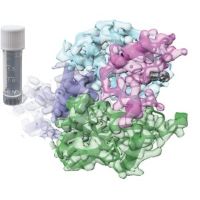 |