

Specification
| Description | Recombinant protein from the full-length sequence of Homo sapiens apoptosis inducing factor mitochondria associated 2 (AIFM2), transcript variant 2 (NM_032797). |
| Organism | Homo sapiens (Human) |
| Expression Host | Human Cells |
| Tag Info | His or DYKDDDDK. Please contact us if you need further information or require specific designed tag. |
| Purity | Greater than 90% by SDS-PAGE gel |
| Uniprot ID | Q9BRQ8 |
| Entry Name | FSP1_HUMAN |
| Gene Names | AIFM2 AMID PRG3 |
| Alternative Gene Names | AMID PRG3 |
| Alternative Protein Names | Ferroptosis suppressor protein 1 (FSP1) (EC 1.6.5.-) (Apoptosis-inducing factor homologous mitochondrion-associated inducer of death) (AMID) (p53-responsive gene 3 protein) |
| Application | Antigens, Western, ELISA and other in vitro binding or in vivo functional assays, and protein-protein interaction studies; For research & development use only! |
| Buffer | Purified protein formulated in a sterile solution of PBS buffer, pH7.2, without any preservatives |
| Endotoxin | Endotoxin level is < 0.1 ng/µg of protein (<1EU /µg) |
| Length | 373 |
| Molecular Weight(Da) | 40527 |
| Protein Sequence | (The sequence of expressed protein may have some variation from the sequence shown below. Please contact us for the exact sequence.) MGSQVSVESGALHVVIVGGGFGGIAAASQLQALNVPFMLVDMKDSFHHNVAALRASVETGFAKKTFISYSVTFKDNFRQGLVVGIDLKNQMVLLQGGEALPFSHLILATGSTGPFPGKFNEVSSQQAAIQAYEDMVRQVQRSRFIVVVGGGSAGVEMAAEIKTEYPEKEVTLIHSQVALADKELLPSVRQEVKEILLRKGVQLLLSERVSNLEELPLNEYREYIKVQTDKGTEVATNLVILCTGIKINSSAYRKAFESRLASSGALRVNEHLQVEGHSNVYAIGDCADVRTPKMAYLAGLHANIAVANIVNSVKQRPLQAYKPGALTFLLSMGRNDGVGQISGFYVGRLMVRLTKSRDLFVSTSWKTMRQSPP |
Background
| Function | FUNCTION: A NAD(P)H-dependent oxidoreductase involved in cellular oxidative stress response. At the plasma membrane, catalyzes reduction of coenzyme Q/ubiquinone-10 to ubiquinol-10, a lipophilic radical-trapping antioxidant that prevents lipid oxidative damage and consequently ferroptosis. Cooperates with GPX4 to suppress phospholipid peroxidation and ferroptosis. This anti-ferroptotic function is independent of cellular glutathione levels (PubMed:31634899, PubMed:31634900). May play a role in mitochondrial stress signaling. Upon oxidative stress, associates with the lipid peroxidation end product 4-hydroxy-2-nonenal (HNE) forming a lipid adduct devoid of oxidoreductase activity, which then translocates from mitochondria into the nucleus triggering DNA damage and cell death (PubMed:26689472). Capable of DNA binding in a non-sequence specific way (PubMed:15958387). {ECO:0000269|PubMed:15958387, ECO:0000269|PubMed:26689472, ECO:0000269|PubMed:31634899, ECO:0000269|PubMed:31634900}. |
| Pathway | |
| Protein Families | FAD-dependent oxidoreductase family |
| Tissue Specificity | Detected in most normal tissues as two transcripts of 1.8 and 4.0 kb in length, respectively. Highly expressed in heart, moderately in liver and skeletal muscles, and expressed at low levels in placenta, lung, kidney, and pancreas. Both transcripts expressed following p53/TP53 induction. The shorter 1.8 kb transcript seems to be the major transcript in EB1 colon cancer cells. {ECO:0000269|PubMed:12135761}. |
QC Data
| Note | Please contact us for QC Data |
| Product Image (Reference Only) | 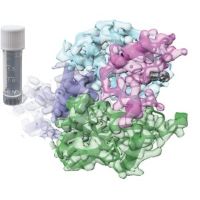 |